Our faculty, alumni, and partners contribute to a broad range of exciting discoveries and research. Our mission is to advance research and innovation to discover new knowledge. The spotlights below are a few examples of our research collaborations, TEDx style talks (GRIT-X), and video spotlights that showcase innovation and excellence. UMBC and COEIT is a diverse and inclusive environment where we produce graduates who are highly valued and in demand, poised to deliver solutions to global challenges and responsive to the region and beyond.
UMBC is designated by Carnegie Classifications as a Doctoral University with Very High Research Activity (R1). UMBC also ranks in the top 100 public universities to receive federal research funding. Explore additional fast facts about UMBC, including rankings and research highlights.
Read UMBC’s 2025 annual report Inquiring Minds to learn more about Research and Creative Achievement at UMBC.
Are you looking for a research collaborator or an expert on a topic in the news? Search faculty profiles to find the right contact by name, department, or keywords.
UMBC News Research Spotlights

Magnets often attract curious minds. Einstein told of his profound sense of hidden order after witnessing the invisible forces of the Earth’s magnetic field guide the needle of a compass. For Ethan Bowers, it was the wonder of learning Maxwell’s laws—equations developed by 19th-century Scottish physicist James Clerk Maxwell that unite magnetism, electricity, and light—that really pulled him in.
Learn how this new tool helps answer questions for curious researchers at UMBC.

UMBC’s new Make Your Research Come Alive (MyRCA) program is helping faculty translate their scholarship into compelling stories that resonate across disciplines, sectors, and audiences. Launched in November 2025, the program wrapped up its inaugural cohort with a May showcase.
Read more to discover how the MyRCA program helps UMBC faculty maximize the impact of their research.

Personalized and precise treatments will improve patients’ quality of life in a fast-approaching future driven by AI, wearable tech, and other innovations. UMBC student and faculty researchers led by Mehdi Kiani, a professor in the Department of Computer Science and Electrical Engineering, are at the frontiers of these changes.
Read the full story to learn how this research combines medical implants, computational models, and machine learning to treat stomach disorders.

UMBC researchers are discovering building blocks of hand motions, aiming to improve physical therapy for humans and find better ways to program robots. They’re turning to a novel source material for these gestures: classical Indian dance.
Click here to read the full story and learn more.
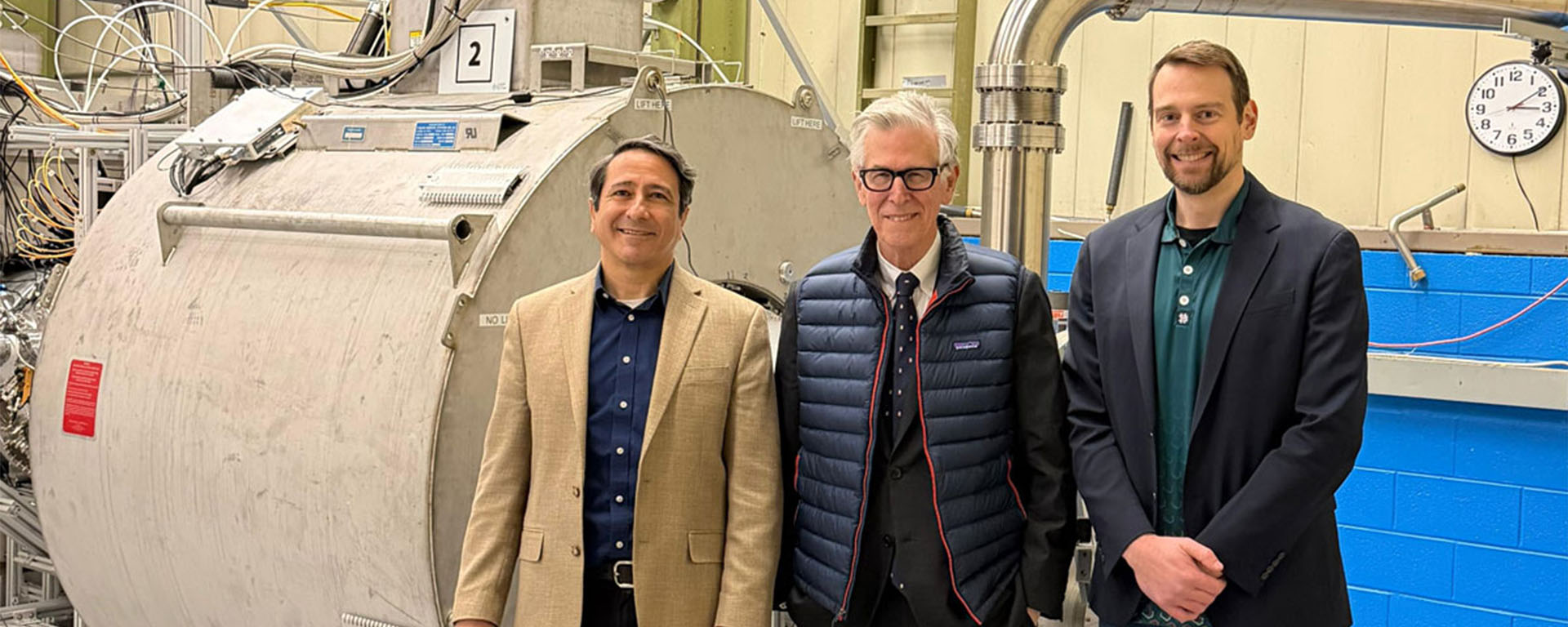
U.S. Representative Don Beyer recently visited UMBC Professor Carlos Romero Talamás to tour his lab’s innovative ‘centrifugal mirror’ approach to fusion energy, a promising concept for creating clean, commercially viable power.
Read more to see how this research is shaping the future of fusion energy.
Read more UMBC News.