Our faculty, alumni, and partners contribute to a broad range of exciting discoveries and research. Our mission is to advance research and innovation to discover new knowledge. The spotlights below are a few examples of our research collaborations, TEDx style talks (GRIT-X), and video spotlights that showcase innovation and excellence. UMBC and COEIT is a diverse and inclusive environment where we produce graduates who are highly valued and in demand, poised to deliver solutions to global challenges and responsive to the region and beyond.
UMBC is designated by Carnegie Classifications as a Doctoral University with Very High Research Activity (R1). UMBC also ranks in the top 100 public universities to receive federal research funding. Explore additional fast facts about UMBC, including rankings and research highlights.
Read UMBC’s 2025 annual report Inquiring Minds to learn more about Research and Creative Achievement at UMBC.
Are you looking for a research collaborator or an expert on a topic in the news? Search faculty profiles to find the right contact by name, department, or keywords.
UMBC News Research Spotlights
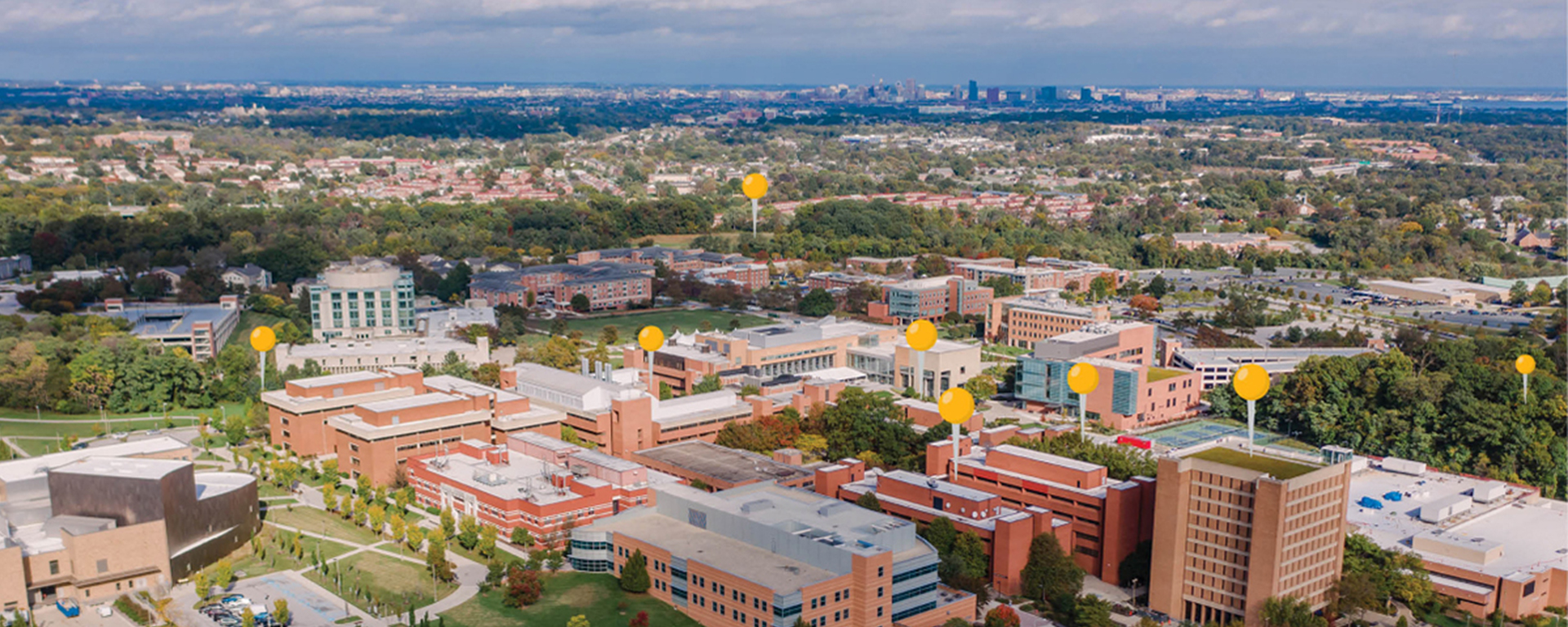
Spring on UMBC’s main campus brings a host of familiar sights and sounds: blooms on the magnolia trees, the chatter of red-winged blackbirds calling from the reeds around Library Pond, greening grass on the campus Quad, and black-and-gold-bedecked Grit Guides leading groups of prospective Retrievers around what may soon become a home away from home. The guides cover the usual highlights—Academic Row, the Retriever Activity Center, the AOK Library, eating establishments, and residential halls. UMBC is a place to live, to learn, and to find community. And while some of the functions of campus spaces are obvious, others are often hidden.
Read more to discover some of the amazing ways Retrievers are using the campus itself for experiential learning and diverse research.
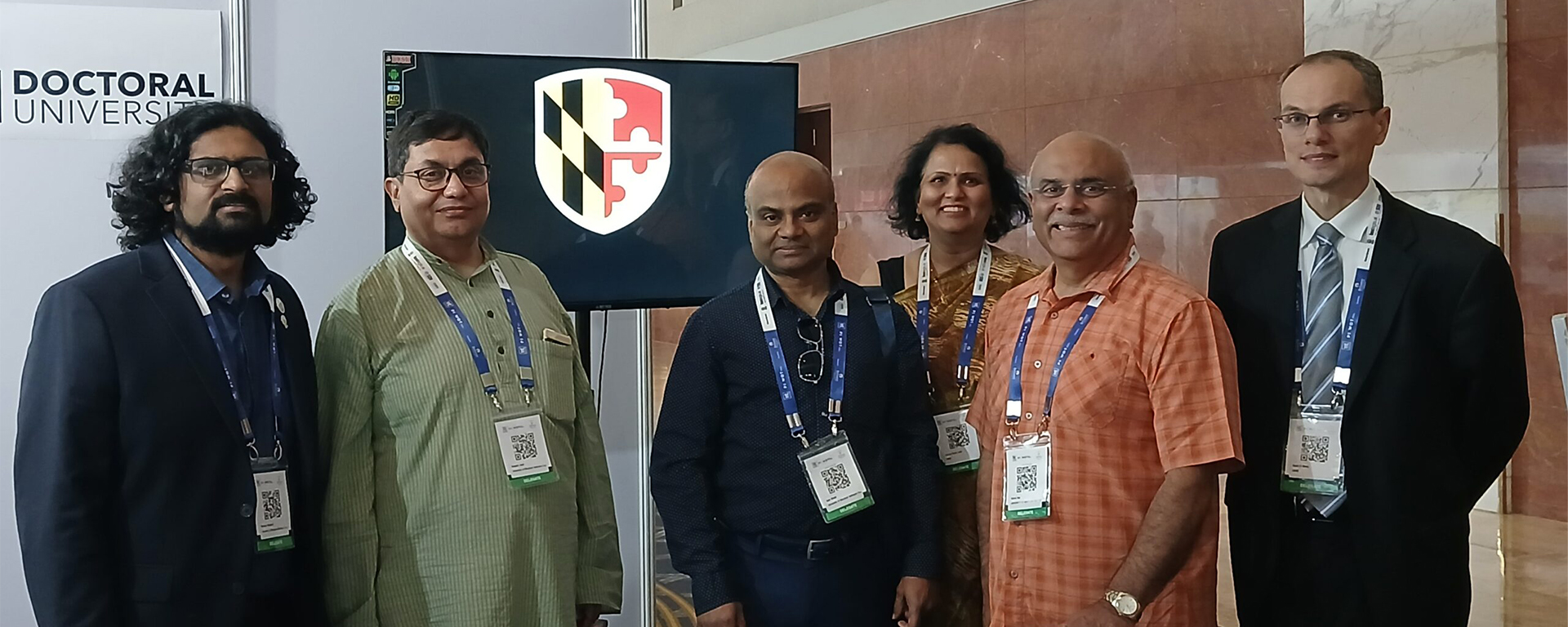
A six-person UMBC team built international connections at the “PIWOT – World of Technology” conference, held in late January in Mumbai, India. The conference is organized by the alumni association for graduates of the prestigious Indian Institutes of Technology (IITs), and attracts many of the leaders in science and technology in India and around the world. The CEO of Alphabet, Inc. (Google’s parent company), the co-founder of Sun Microsystems, and the CEO of IBM are all graduates of IITs.
Read more about UMBC’s participation in the “PIWOT – World of Technology” conference.,
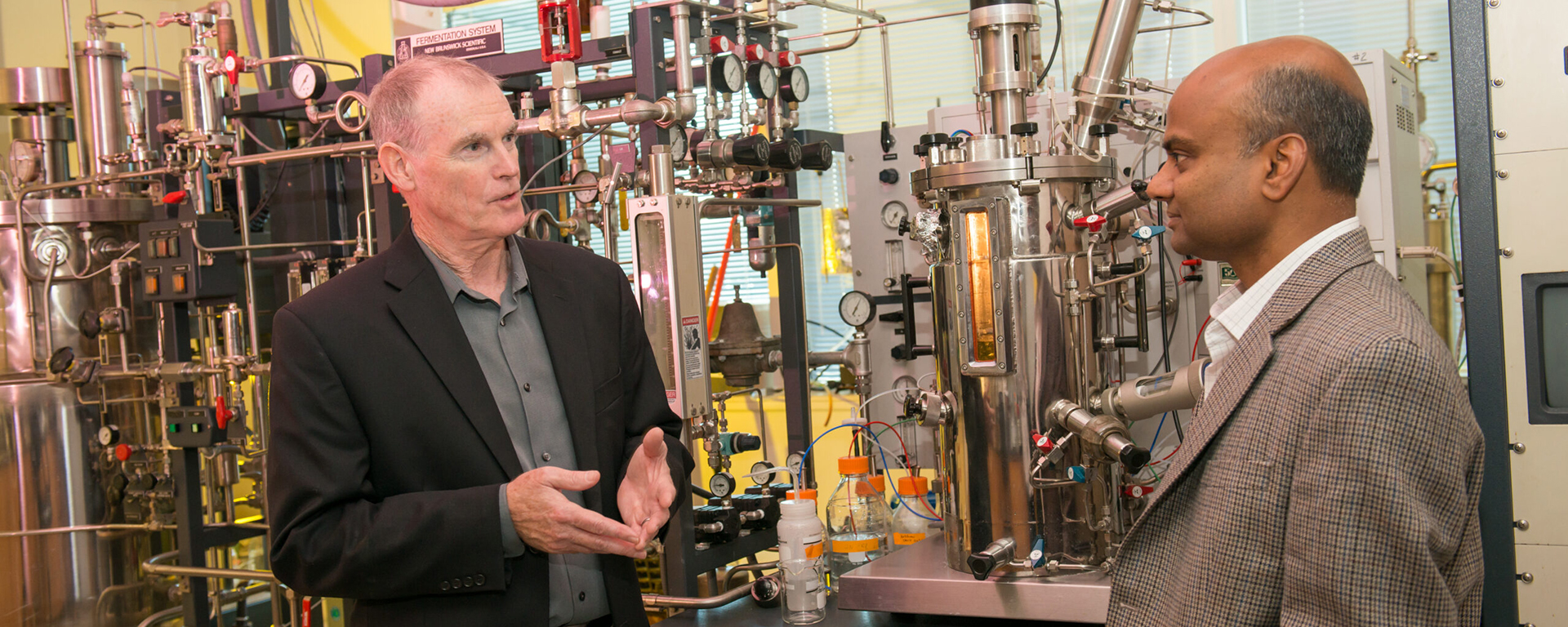
A new $7.8 million award from the Defense Advanced Research Projects Agency (DARPA) will support the development of biologically-powered underwater sensors. Right now, a vast network of underwater sensing devices in oceans around the world conducts environmental monitoring and supports national security—and most of these devices rely on batteries and underwater cables for power.
Read more about this unique collaboration of interdisciplinary experts.
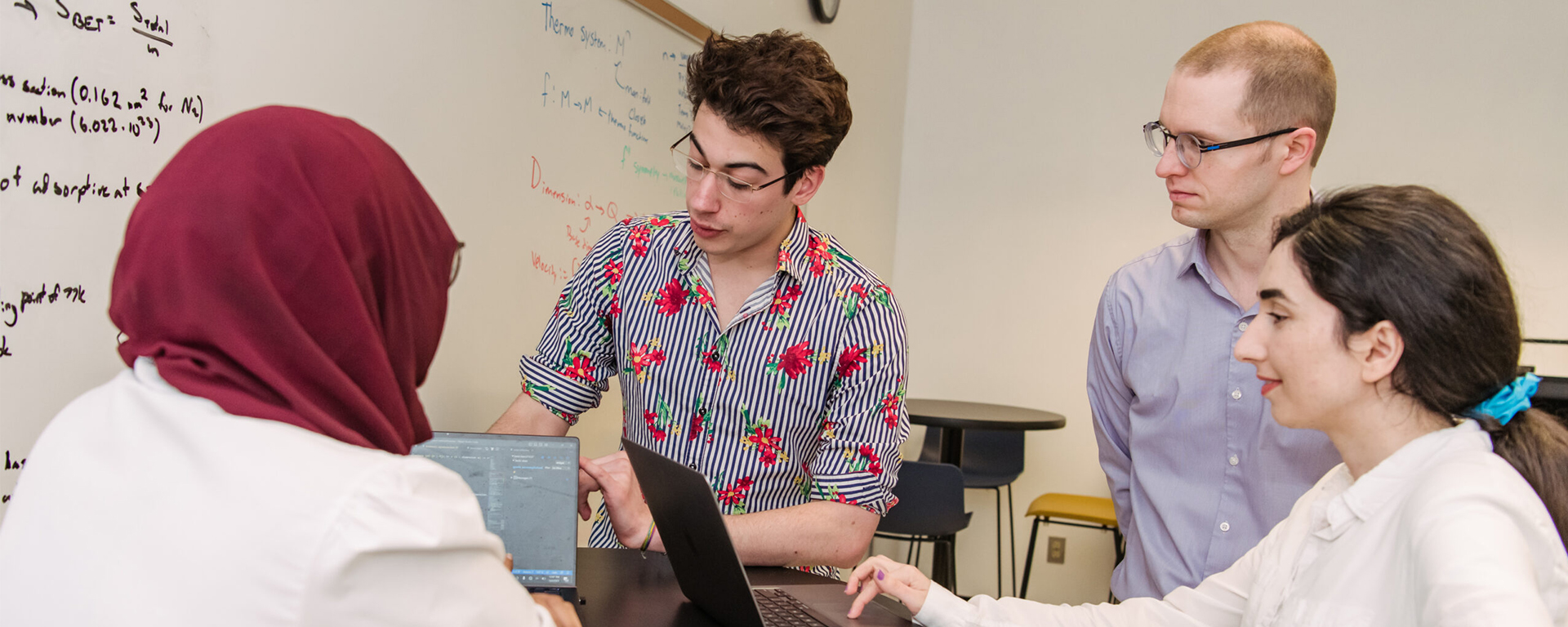
A multidisciplinary team of UMBC researchers was recently awarded $3.8 million from the Defense Advanced Research Projects Agency (DARPA) to develop new computational methods for assessing the feasibility of scientific claims. The project is motivated by the speed and volume of new developments in science and the need for tools to help evaluate the soundness of new claims.
Read more about UMBC’s recent debut of the “DeepResearch” tool.

UMBC is approaching 30 years of collaboration with the National Aeronautics and Space Administration (NASA), a partnership that largely culminates under the university’s three major cooperative agreements with the agency. According to the NSF’s latest Higher Education Research and Development (HERD) survey, UMBC is among the nation’s top 10 universities receiving federal funding from NASA. In 2024, UMBC scientists, researchers, interns, and engineers have reached new levels of achievement in connection to this partnership—some even going as far as to the surface of the Moon…in a few years.
Take a look back at five ways UMBC collaborated with NASA.
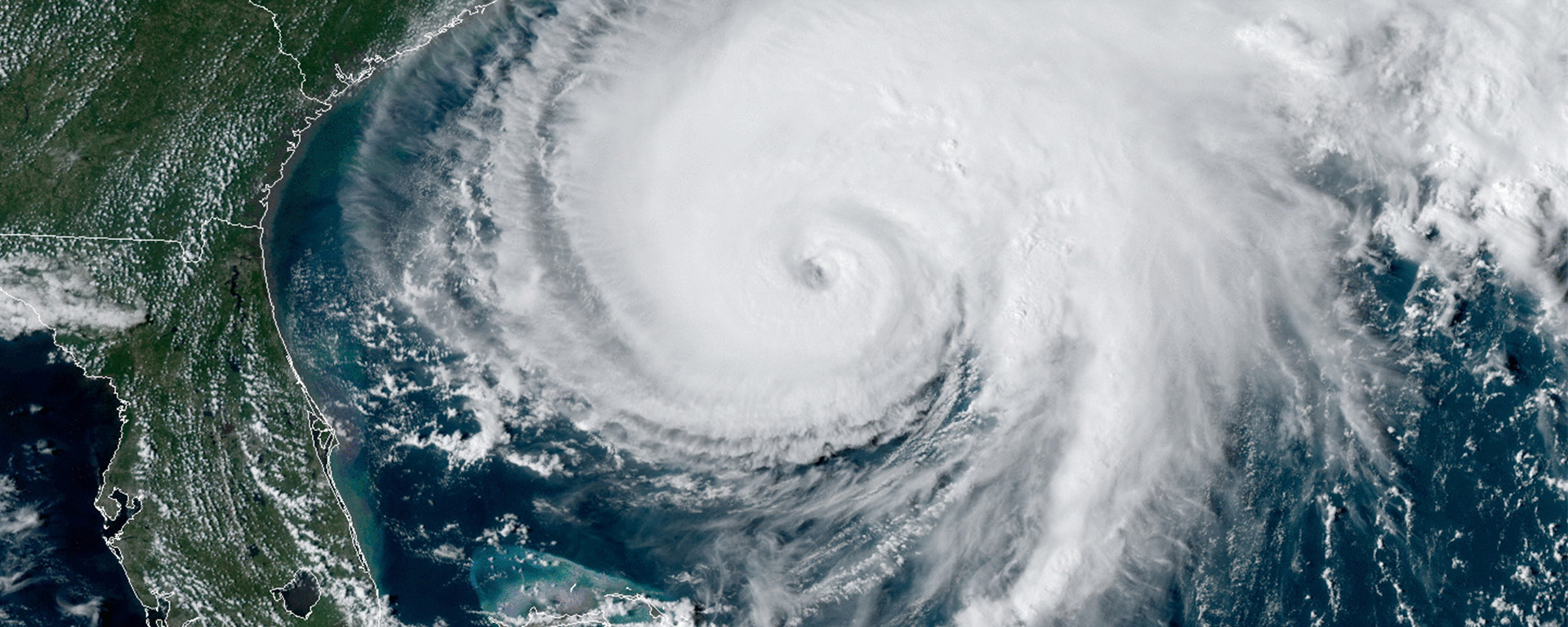
Mechanical engineering Ph.D. student Md Badrul Hasan has received the 2025 Professor Kirti “Karman” Ghia Memorial Award from the American Institute of Aeronautics and Astronautics (AIAA), for his research modeling the fluid flow inside hurricanes with physics-informed machine learning.
Read more about the UMBC interdisciplinary team improved existing simulation modeling of energy flow in hurricanes.
Read more UMBC News.
From UMBC News and Magazine
UMBC’s Hilltop Institute in The Baltimore Sun
Posted: January 22, 2014, 5:38 PM
Robert Provine, Psychology, to be Featured in New Book
Posted: January 22, 2014, 3:57 PM
Tom Cronin, Biology, in WIRED
Posted: January 13, 2014, 8:11 PM
U.S. News Ranks UMBC’s Information Systems Online M.S. as a Top Program
Posted: January 13, 2014, 7:58 PM
UMBC Study on Maryland Dream Act in the Gazette
Posted: January 9, 2014, 6:05 PM
Stuart Schwartz, CUERE, on the Marc Steiner Show
Posted: December 20, 2013, 10:03 PM
Gymama Slaughter, CSEE, Receives NSF CAREER Award
Posted: December 13, 2013, 9:04 PM
First hackUMBC concludes successfully
Posted: December 10, 2013, 9:24 PM
Amy Hurst, Information Systems, Collaborates on $3.7 million project
Posted: December 5, 2013, 3:50 PM
Jessica Berman, English, Presents Guest Lecture at University of Mysore, India
Posted: November 20, 2013, 5:59 PM
- Go to page 1
- …
- Go to page 129
- Go to page 130
- Go to page 131
- Go to page 132
- Go to page 133
- …
- Go to page 138