UMBC students are powering Maryland’s workforce through local internships
Each summer, hundreds of Retrievers take their classroom skills and turn them into real-world experiences through internships. While their opportunities span the globe, many Retrievers choose to remain local and use their talents to support enterprises across Maryland. From the iconic Dominos Sugar Factory to the pharmaceutical giant AstraZeneca, these 2026 interns made lasting contributions to the Old Line State.
“One of the numbers I find most powerful is that 65 percent of our employed undergraduate degree recipients had previously interned or worked for the organization that ultimately hired them,” shared Christine Routzhan, director of UMBC’s Career Center. “It really demonstrates how an internship can become so much more than a summer experience.”
Local work, global impact
UMBC has built relationships with many local employers and facilitates student connections. The companies and organizations that employed the following five Retrievers are all part of the vibrant economic ecosystem in Maryland.
Pelumi Enilolobo, a senior in mechanical engineering, worked at the historic Domino Sugar facility in Baltimore, optimizing packaging operations; Yash Diggikar, a Ph.D. student in computer science, worked for NASA Goddard in Greenbelt on AI-assisted weather and earth-system modeling; Kaleem Butt, a senior in computer engineering, worked at Catonsville-based company RF Safety Laboratory, LLC, helping to test if the radio frequency emissions for new wireless consumer devices stay within safe limits; Joycelyn Chow, a junior in computer engineering, worked for the Johns Hopkins Applied Physics Laboratory in Laurel, Maryland, on cybersecurity research; and Gabriel Farmer, a senior in computer science, worked at T. Rowe Price as a software engineer intern.
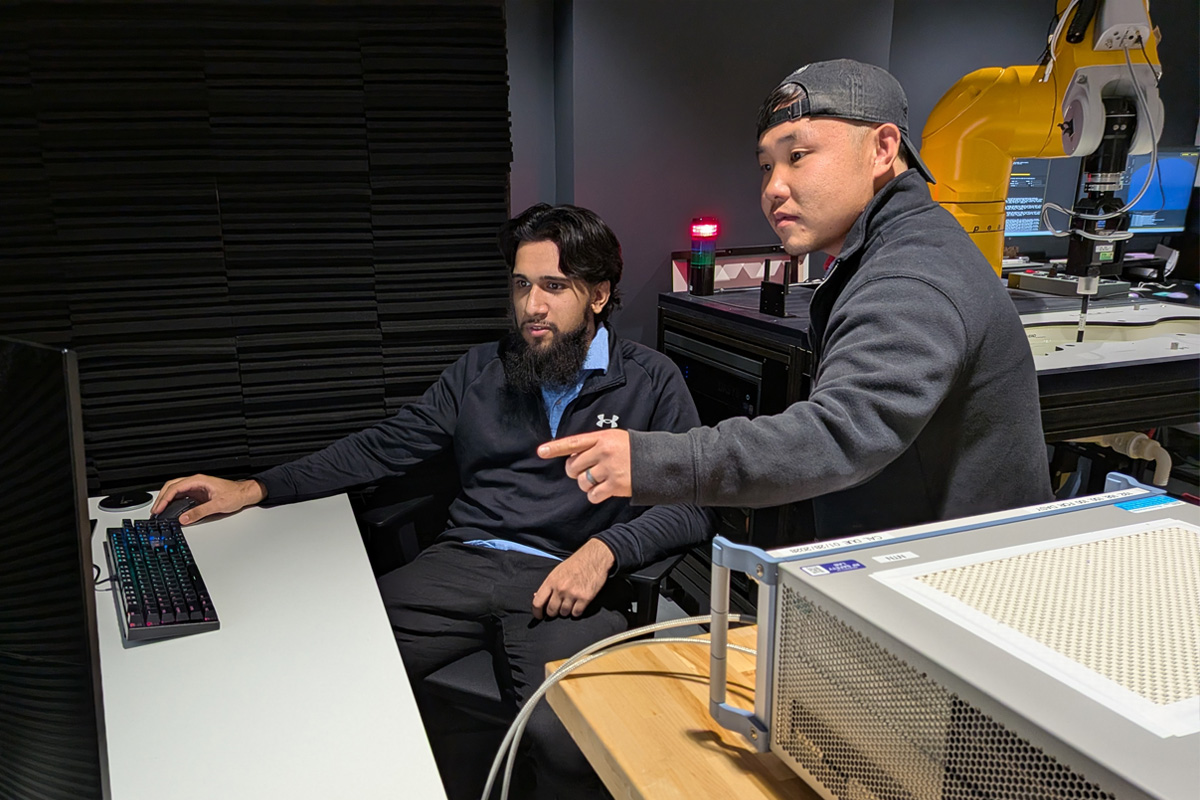 Kaleem Butt (left) and one of his mentors, Tae Woo Kim, director of hearing compliance at RF Safety Lab, in the lab where they test devices. (UMBC)
In a LinkedIn post reflecting on his experience, Farmer shared, “The people matter as much as the work. I came in thinking my project was the whole thing. Some of the best parts of my summer were coffee chats and random conversations with people across the firm. Take every opportunity to learn from those around you!”
Preserving the past
Deep in UMBC’s climate-controlled Special Collections are 750,000 prints, negatives, and transparencies from The Baltimore Sun dating from the 1930s through the 1980s. Before faculty and students can use the collection, archivists must create finding aids. Reese Finnigan, studying the history of the Soviet Union and learning Russian, developed these archival skills working on The Baltimore Sun collection during her first year in the Master of Arts in Public History program.
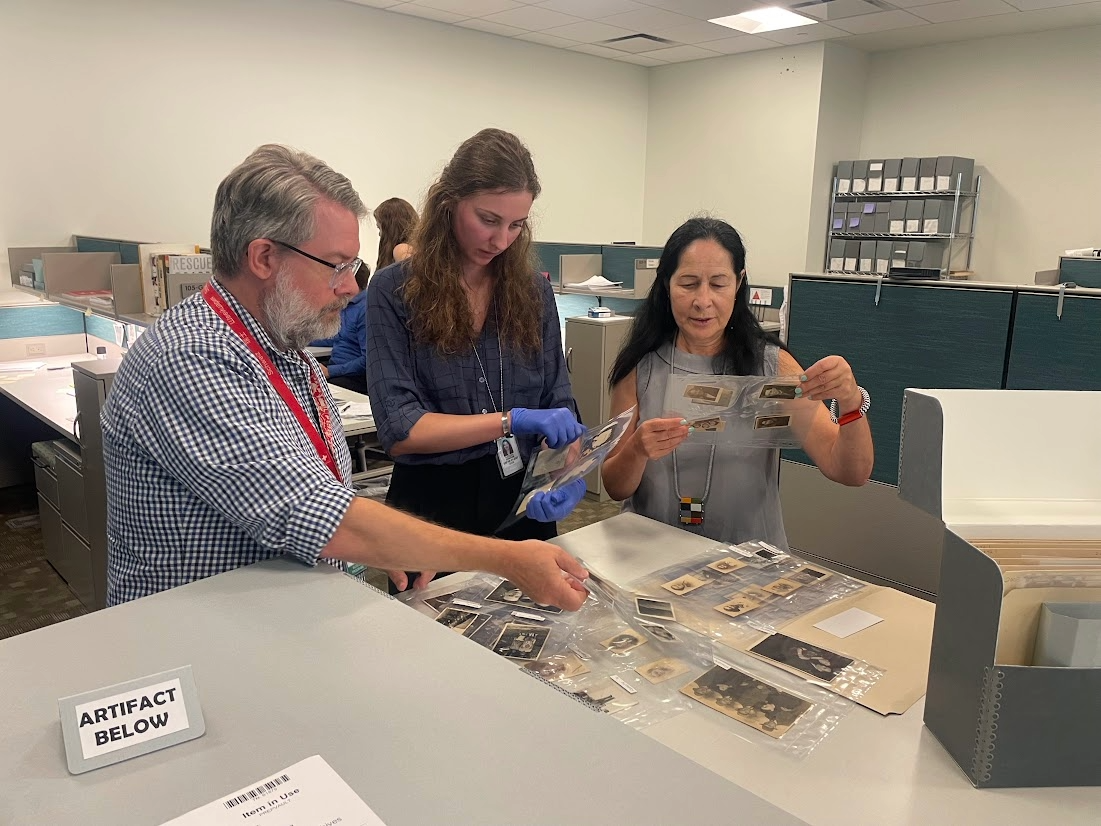 Reese Finnigan (center), with archivists Adam Fielding and Alla Dvorkin, looking through a photography collection at the the United States Holocaust Memorial Museum Shapell Family Collections, Conservation and Research Center in Bowie, Maryland. (Photo courtesy of Catalina Dansberger Duque/UMBC)
This year, when looking for summer internship opportunities, Finnigan was excited to find that the United States Holocaust Memorial Museum Shapell Family Collections, Conservation and Research Center in Bowie, Maryland—a museum she had tried to secure a curatorial or research internship with for years—was seeking an intern with her exact skill set.
“There is no point in preserving all of this history if the public can’t access it. We want to preserve the history and make it easily accessible, whether through exhibitions, digital archives, or physical collections. Good archival work should essentially be invisible,” says Finnigan.
Work that matters
Gratitude is a common thread through all the journeys of this year’s students—for mentors who reach back, for teams that invest in their members, for communities that feel like home, and for the chance to do work that matters.
“I’ve just found myself in a great spot with UMBC. I feel really blessed to have had all the opportunities I’ve had. Being able to do these internships has seriously been great,” says junior biological sciences major Magdalen Ruth, summer intern at the National Institutes of Health in Bethesda.
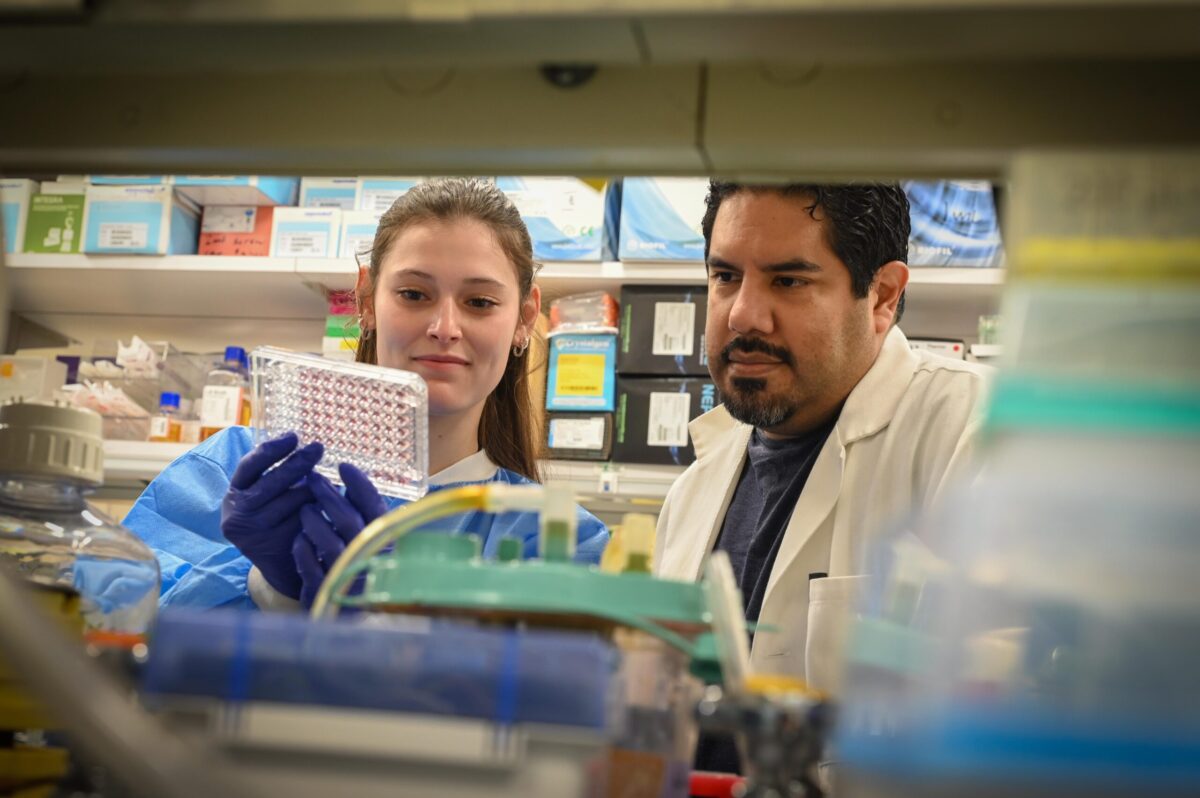 Magdalen Ruth (left) interned at the NIH this summer with senior research biologist Anthony Cruz (right). (Photo courtesy of Ruth)
Mark Harrison, a senior biological sciences major, is in his third summer at Aberdeen Proving Ground, a U.S. Army installation in Aberdeen, Maryland, and Zainab Idowu, a senior biochemistry and molecular biology major and a Meyerhoff Scholar, interned at AstraZeneca in Gaithersburg, Maryland.
Saeed Damadi recently defended his Ph.D. thesis in applied mathematics after beginning in electrical engineering. This summer at the U.S. Food and Drug Administration (FDA), he developed a mathematical model for how illicit drugs taken during pregnancy transfer to the developing baby through the placenta—increasing important understanding in a situation where human testing would be profoundly unethical.
Undergraduate students Noah Reichardt, physics, and Morgan Robbins, computer science, traveled to Hawai‘i to intern at one of the world’s top astronomy institutes. Their experiences at the Institute for Astronomy (IfA) at the University of Hawaiʻi at Mānoa was made possible by a National Science Foundation grant led by UMBC physicist Adi Foord and her collaborators.
When Reichardt and Robbins returned to campus for the fall semester and shared their experiences with Foord, with whom the two conduct research at UMBC, she was elated: “This is exactly the kind of growth and inspiration that I hoped to support with the grant.”
Record setters
Eight UMBC students spent part of their summer meeting business leaders, visiting Maryland companies, and getting a closer look at careers that connect the state to the rest of the world. They were selected for the World Trade Center Institute’s (WTCI) 2026 Albrecht Fellowship, a two-week professional development program hosted in Baltimore City and focused on international business and global affairs. This year, the UMBC group set a record.
Daniel Khoshkepazi, senior manager of fellowships at the World Trade Center Institute, called the eight students “a record for a single university from any given cohort in the past.” WTCI typically limits participation to five or six students from one institution, he says. But UMBC students ranked so highly during what he described as the program’s most competitive application cycle to date that “their exceptional performance earned them a place in the cohort.”
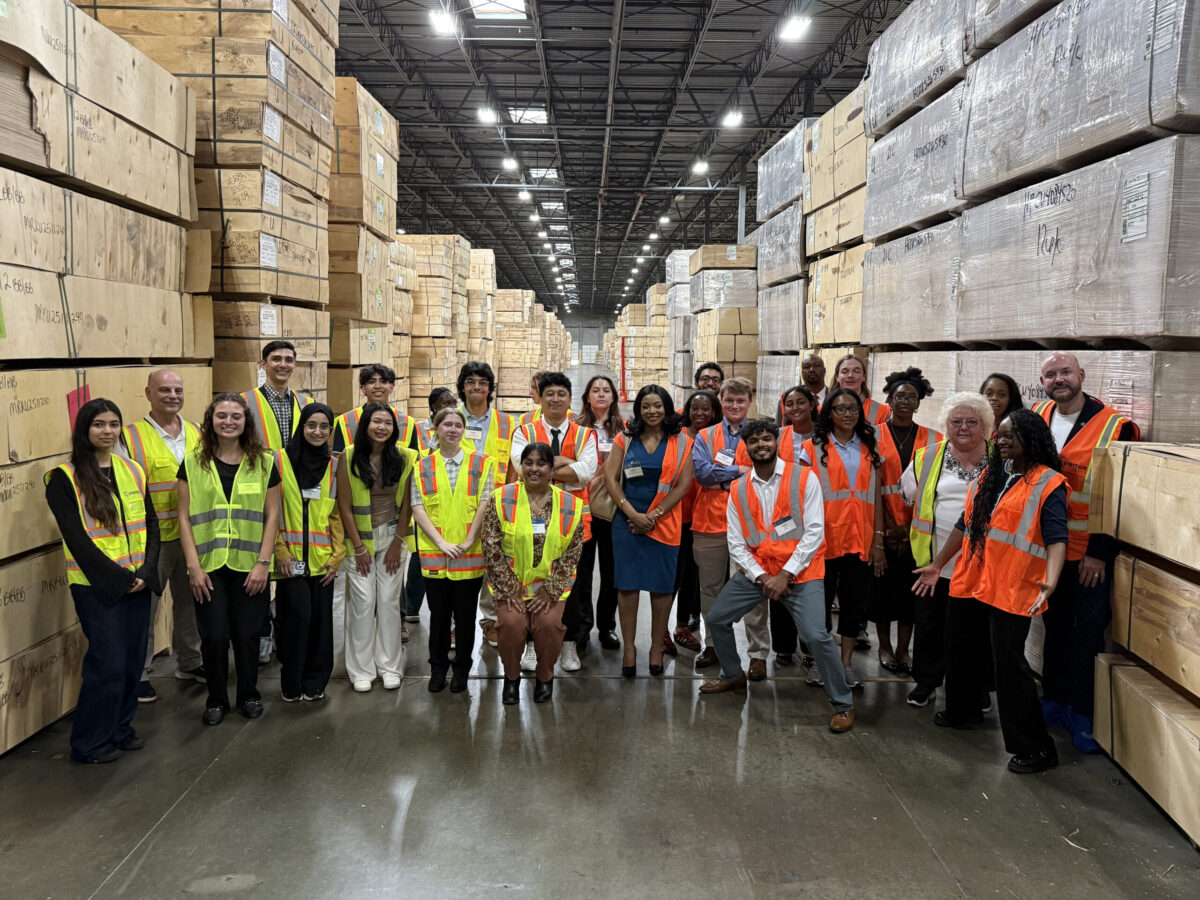 The 2026 WTCI Albrecht Fellows toured many businesses as part of their internship, including Ancora Warehousing and Logistics. (Photo courtesy of Bibi Qudsia Tolwak.)
For the students participating, the two weeks are a chance to test assumptions about their careers, see what they have studied at UMBC in practice, and, in some cases, discover work they had never considered.
Matthew O’Donnell, a senior global studies major and political science minor, appreciates that the students bring different interests and strengths to the group. “One thing I love is that nobody feels like they’re overshadowing one another,” he says. “We each have our interests and strengths, and no matter if it’s a group setting or an individual one, we always contribute in a way that aids both ourselves and the group.”
Laying the groundwork for success
The experiences students take advantage of now help to increase their employment opportunities in the future. Looking at recent data, 83 percent of the undergraduate Class of 2025 participated in internships, research, service-learning and other applied learning experiences. After graduation, 92 percent were employed or pursuing graduate or professional school after graduation, and 91percent of those employed are working in positions directly related to their career goals.
“Students are building relationships, demonstrating their skills and, in many cases, taking the first step toward their careers,” says Routzahn. “These experiences are not only preparing students for the workforce—they are helping launch careers and contributing to the continued strength of Maryland’s workforce.”
UMBC’s Career Center offers support, workshops, and training throughout the year, not only for current students, but also for graduates. Students are strongly encouraged to visit the annual Fall Career and Internship Fair on September 16 to meet with prospective employers, get a free headshot, and network.
“The stories highlighted here are just a glimpse of the incredible experiences UMBC students are gaining through the support of employers, faculty, and the university community,” says Marykate Conroy, associate director of internships and employment.
Read more about the many ways UMBC students are taking advantage of internships to prepare for their futures.
Posted: September 8, 2026, 2:50 PM