Faculty Fulbright funds research in Australia to draw students to macro social work
Kerri Evans is headed to Central Queensland University (CQUniversity) in Sydney, Australia, thanks to the Fulbright U.S. Scholar Program, to bring back to UMBC’s School of Social Work new ideas to inform and encourage more students to pursue a career in macro social work.
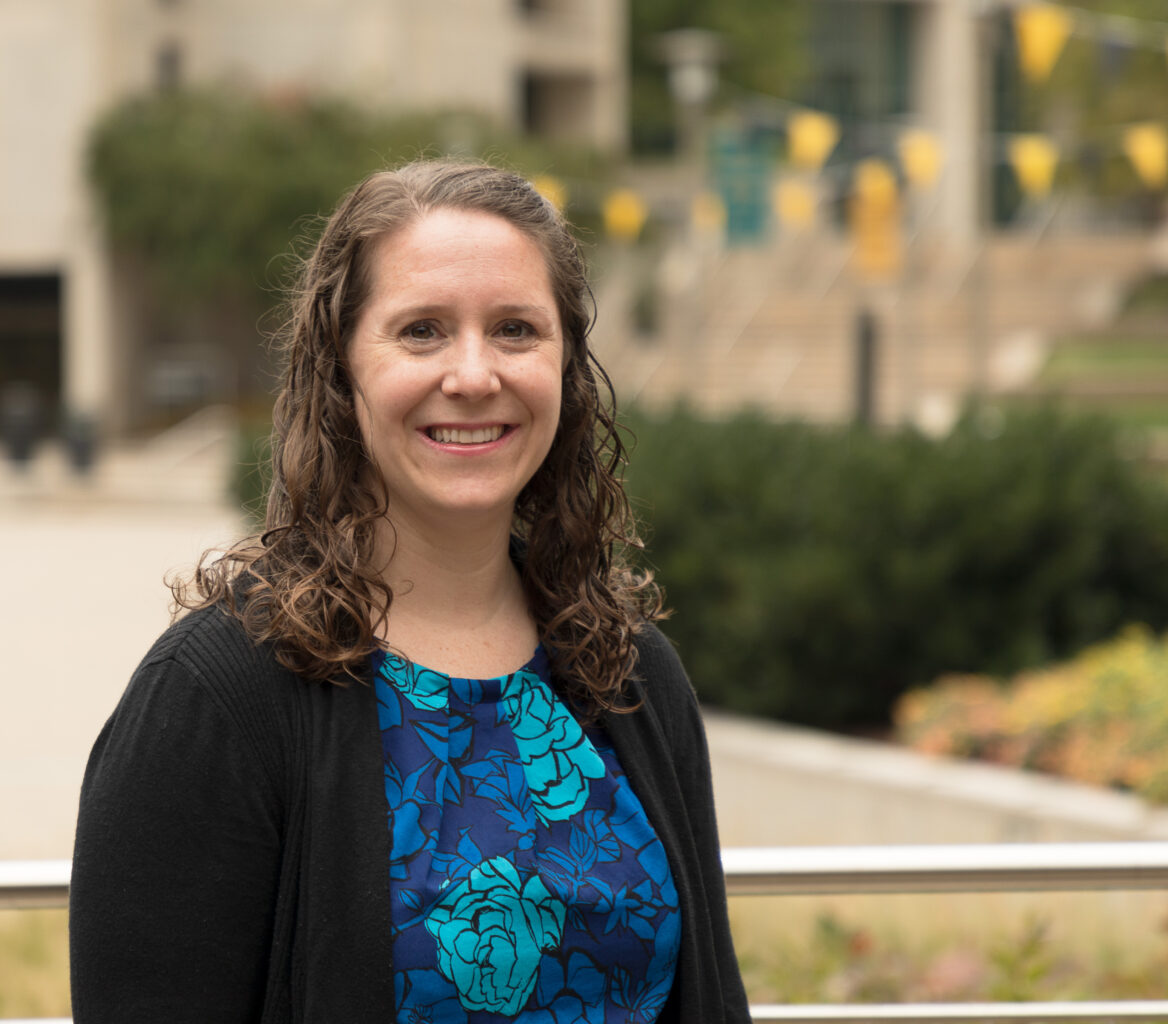 Kerri Evans/Melissa Penley Cormier, M.F.A. ’17
As a macro social worker—someone who focuses on large-scale social issues—Evans spent eight years in social service administration and policy roles before entering academia. Since joining UMBC in 2020, the associate professor of social work has noticed that graduate students are choosing careers in clinical social work—assisting families facing food or housing insecurity, mental health counseling, and substance abuse treatment support—over macro social work. Evans serves as a member of the Special Commission to Advance Macro Social Work, which is concerned about the impact of the decrease in macro social workers beyond UMBC.
While contributing research to the textbook Human Rights and Social Justice in a Global Perspective: An Introduction to International Social Work, Evans learned about Australia’s treatment of immigrants and refugees and began researching social work in Australia. In doing so, she met Sarah Wayland, professor of social work at CQUniversity’s School of Nursing, Midwifery and Social Sciences, and found that they have developed an internship program that highlights macro social work more intentionally to try and address this gap. This academic year, Evans will study how students in CQUniversity’s social work program understand and develop an interest in macro social work roles, including policy, advocacy, and leadership.
“Students in CQUniversity’s social work program bring diverse lived experiences, similar to those of UMBC students who transfer from community colleges,” says Evans. “CQUniversity also has a deep interest in innovative teaching and targeted efforts to include First Nations students and international students. Through in-depth interviews with these students, we will contribute to scholarship on how lived experience—especially trauma—influences career choices in social work.”
Evans, whose research focuses on immigrant and refugee populations, draws many international and immigrant students to her classes. When she learned that CQU’s Master’s in Social Work program focused on training international students, Evans knew this was the right collaboration.
 (Image courtesy of UMBC’s School of Social Work)
During the study, she will supervise two social work students from CQUniversity. They will conduct research virtually with two UMBC undergraduate students who will be part of the community advisory board that will guide the project, help with literature reviews, and be co-authors on peer-reviewed articles and/or conference presentations.
“Australia’s accreditation process closely mirrors the United States’, yet CQUniversity implements it differently than UMBC. For instance, they offer more macro-focused courses and a research internship not currently available at UMBC,” says Evans. “This opens valuable opportunities for mutual learning and possible curricular innovation. UMBC’s social work department is beginning a curriculum review, making this an ideal time for collaboration.”
UMBC student and faculty Fulbrights have traveled the world to build research collaborations and develop creative solutions to some of the world’s most pressing issues. Sarah Jewett, a 2024 Fulbright alum to Loughborough University, England, is now at the helm of UMBC’s faculty Fulbright program and will ensure faculty have the support they need as they change the world.
“I have experienced the transformative power of these global opportunities,” says Jewett, director of learning partnerships in research and practice in UMBC’s Honors College. “I look forward to supporting faculty and staff as they explore the full range of Fulbright options.”
Posted: September 8, 2026, 2:06 PM