Mentorship and momentum: How UMBC support propelled six students into HHMI’s first Cech Fellows cohort
This summer, six rising juniors from UMBC are among the 176 undergraduates nationwide selected for the inaugural cohort of the Howard Hughes Medical Institute’s (HHMI) Cech Fellows program. Named for Nobel laureate Thomas R. Cech, the nine-week research experience pairs promising students with HHMI scientists at top institutions across the country. For these Retrievers, the fellowship is more than a prestigious opportunity: It’s a culmination of support, community, and hands-on experiences at UMBC that have opened doors.
Amir Walton-Irvin, a computer engineering major and an Undergraduate Research Training Initiative for Student Enhancement (U-RISE), HHMI, Meyerhoff, and Goldwater Scholar, is spending his summer at MIT as a Cech Fellow and an MIT Summer Research Program in Biology intern. As a member of Steven Flavell’s research group, he’s developing deep learning methods to analyze brain imaging data from C. elegans—a microscopic roundworm with just 302 neurons used as a model organism in research. The work builds directly on Walton-Irvin’s research at UMBC with Tulay Adali, professor of computer science and electrical engineering, where he uses fMRI to investigate how environmental factors affect the brains of neurologically healthy adults. “This jump allows me to explore how contextual and physiological factors reshape the functional organization of the nervous system,” he explains.
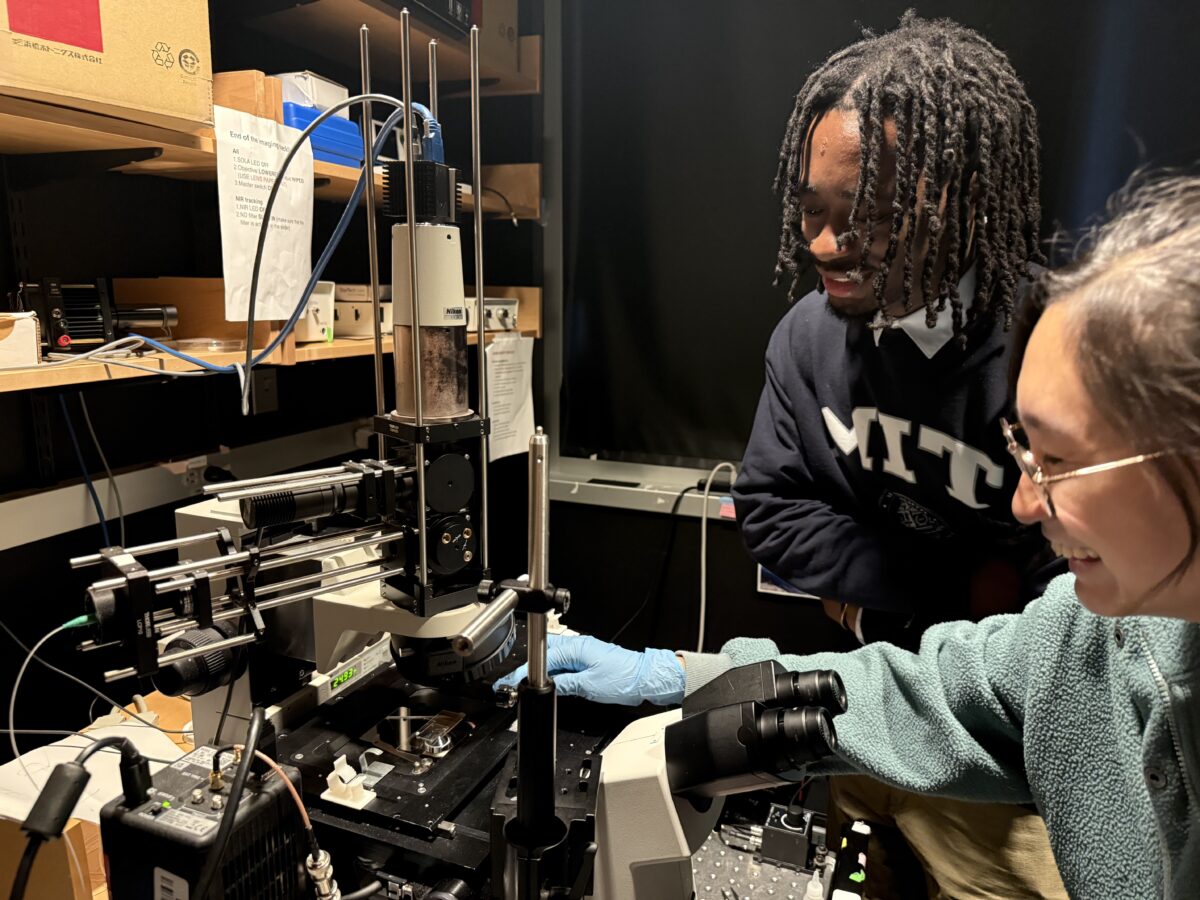 Amir Walton-Irvin (left), and a Ph.D. student in the Flavell Laboratory perform confocal microscopy. (Courtesy of Walton-Irvin)
Walton-Irvin’s path to Flavell’s lab started with the Quantitative Methods Workshop (QMW) at MIT, a seven-day professional development program that the Meyerhoff Scholars Program nominated him for. There, group lunches with faculty and sessions on machine learning in neuroscience, protein folding, and genomic sequencing sparked lasting connections. In particular, a lunch with Flavell led to ongoing conversations that aligned with the Cech opportunity, which is now creating fresh networking opportunities. Walton-Irvin’s leadership roles in the National Society of Black Engineers and UMBC’s chapter of the Institute of Electrical and Electronics Engineers have created further opportunities for networking with peers and mentors.
Shared ambition supports success
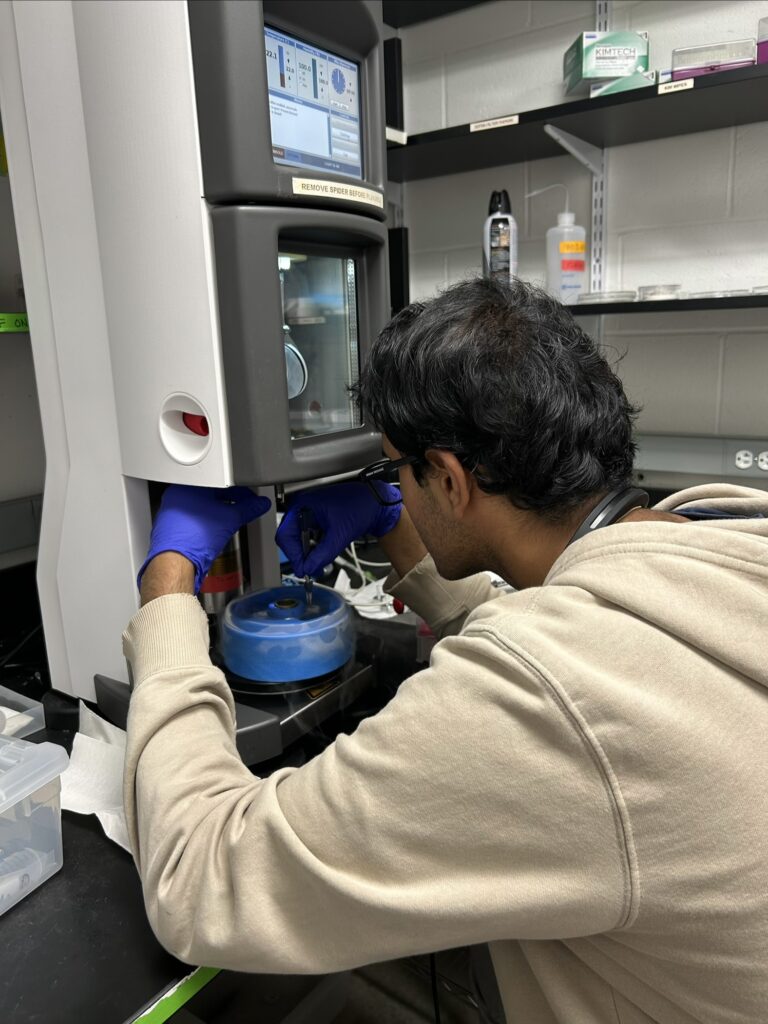 Aryan Srivastava is pursuing virology research
 in the Harrison Lab at Harvard.
(Courtesy of Srivastava)
Aryan Srivastava, a dual degree student in biochemistry and molecular biology and bioinformatics and computational biology, is diving into structural virology in Stephen C. Harrison’s lab at Harvard. As president of both the Honors College Council and the Bioinformatics and Computational Biology Association, and a Meyerhoff, HHMI, and U-RISE scholar, Srivastava has built a strong scientific identity at UMBC: In his first year, he began conducting research with Michael Summers, HHMI Investigator and professor of chemistry and biochemistry.
A talk Harrison gave at an HHMI Science Meeting inspired Srivastava; financial support from his scholars programs had made his attendance possible. That encounter combined with his ongoing structural HIV research in the Summers Lab positioned him to pursue the Cech Fellowship. With Harrison, he will further explore the complex ways viruses enter cells that Harrison discussed at the meeting.
“Meeting peers who share your ambitions is one of the most important things an undergraduate can do,” Srivastava says. He also participated in the QMW at MIT, and roles in student organizations have connected him with program directors at federal grantmaking agencies, graduate students, and even Nobel laureates. Those relationships continue to pay dividends in Boston, where he’s reconnected with UMBC alumni like Arjun Kanjarpane ’24, biochemistry and molecular biology, a Ph.D. student at Harvard.
From participation to leadership
Silvi Shah, a Meyerhoff Scholar studying biochemistry and molecular biology, is in Elizabeth Engle’s lab at Boston Children’s Hospital, affiliated with Harvard Medical School and the Broad Institute. Shah’s neuroscience research with Weihong Lin at UMBC, where she is examining the effects of e-cigarette vapor on the olfactory system and behavior in mice, sparked her interest in deepening her mechanistic understanding of the brain by focusing on biomarkers for neurodevelopmental disorders.
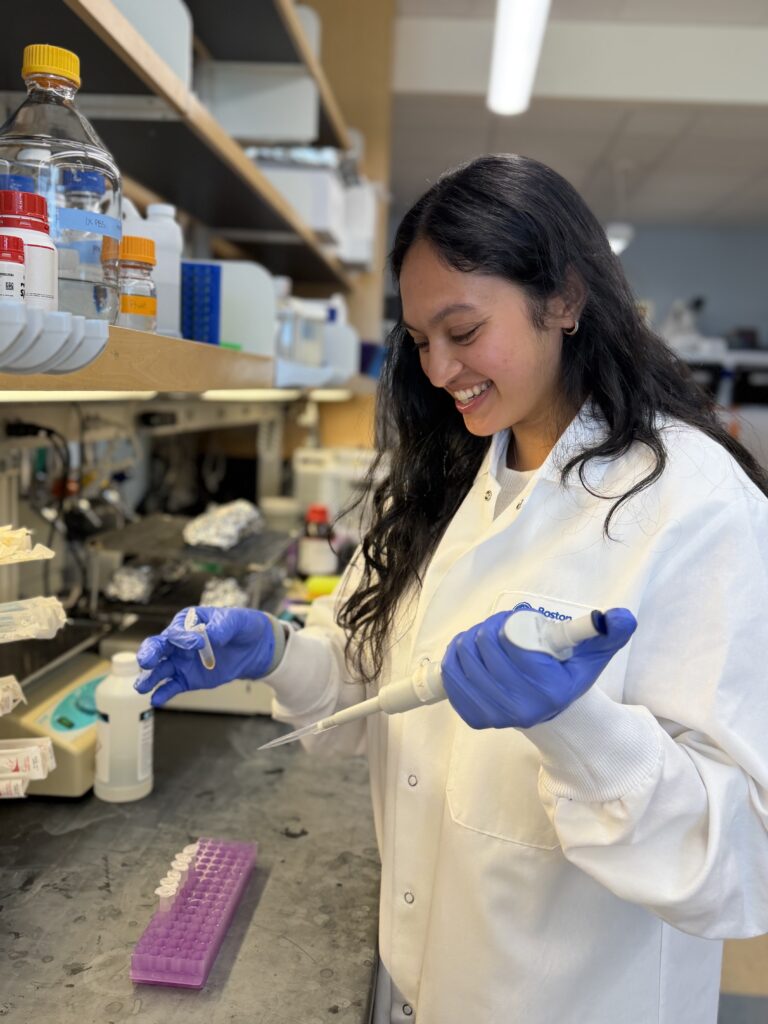 Silvi Shah is conducting neuroscience research with Elizabeth Engle at the Harvard Medical School. (Courtesy of Shah)
Being a member of the Meyerhoff, HHMI, and U-RISE scholars programs, and taking on leadership roles in Meyerhoff and the Phi Delta Epsilon Medical Fraternity, built Shah’s confidence and supplied community and mentorship. She connected with Harvard neuroscientist Beth Stevens at an HHMI Science Meeting, who introduced her to the Engle Lab. Award-winning presentations at the Annual Biomedical Research Conference for Minoritized Students (ABRCMS) and interactions with Nobel laureates, renowned faculty, graduate program directors, and alumni have broadened her perspective, she says.
In Boston, she’s reconnecting with scientists from the HHMI meeting and tapping into the Meyerhoff alumni network. “I am developing advanced research techniques and approaches that I would not have otherwise had the opportunity to learn at this stage of my education. These experiences have strengthened my commitment to an M.D./Ph.D. and a career in pediatric neuroscience research,” she shares.
Meanwhile, Nina-Simone Hunter, a biological sciences major, Meyerhoff, HHMI, and U-RISE Scholar, is at Cornell University in Liz Johnson’s lab. The group’s integration of microbiology, biochemistry, genomics, and molecular biology perfectly matches her interests and future Ph.D. plans, she says.
Preparation for the national stage
Nahom Getachew, a biochemistry and molecular biology major, Meyerhoff and HHMI Scholar, and Ethiopian immigrant, initially doubted research was for him, but opportunities at UMBC changed that, he says. Getachew attended an HHMI Science Meeting and ABRCMS with support from the Meyerhoff program. Squire Booker, a University of Pennsylvania biochemist and HHMI Investigator, spoke at both events, and Getachew asked follow-up questions about his work and the opportunity to contribute—which is now being realized through the Cech Fellows program.
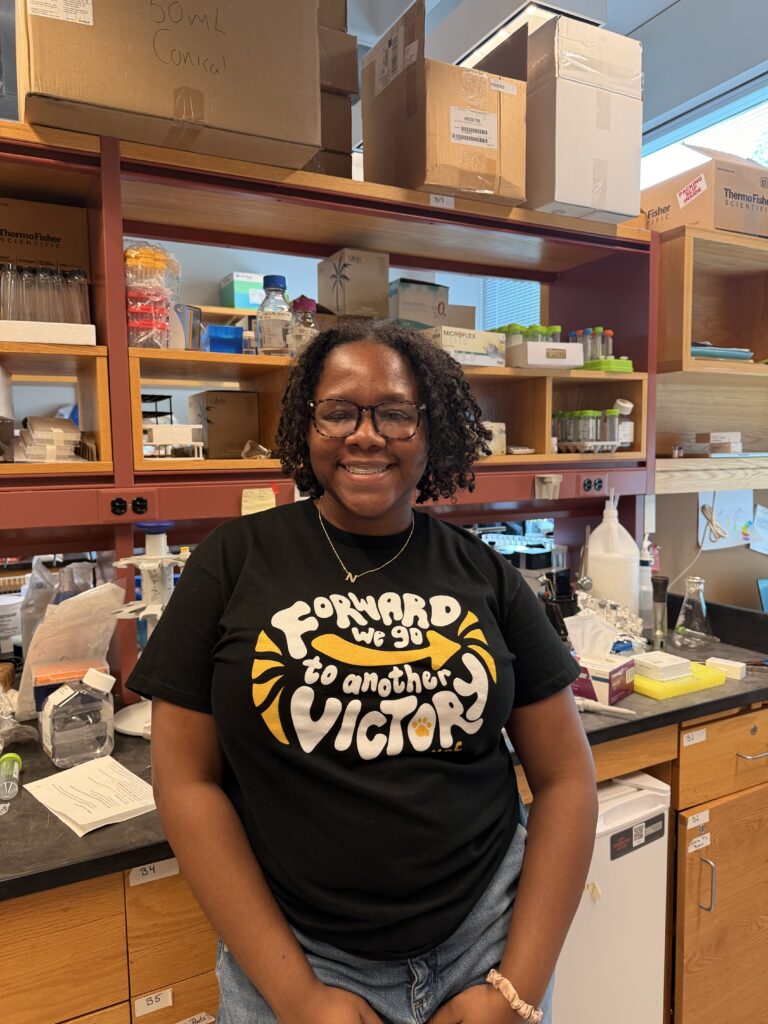 Nina-Simone Hunter is integrating microbiology, biochemistry, genomics, and molecular biology in Liz Johnson’s lab at Cornell. (Courtesy of Hunter)
“Networking is one of the most important skills for finding summer research opportunities,” Getachew notes. In addition to Booker, he connected with a Cech program coordinator at ABRCMS. Getachew prepared for national conferences by practicing communicating his work under Marcin Ptsazek, associate professor of chemistry and biochemistry, at UMBC’s Summer Undergraduate Research Fest and Undergraduate Research and Creative Achievement Day.
Now in the Booker Lab, he’s mastering new techniques in a drug discovery project, presenting results at the Cech Fellows Research Symposium at HHMI’s Janelia Research Campus, and connecting with peers who share similar goals, including fellow UMBC Cech Fellow Djina Awungnjia, a biological sciences major and McNair Scholar. All six UMBC fellows will present at the culminating symposium at HHMI Janelia, further expanding their national network.
As these Cech Fellows advance ambitious projects—from neural imaging analysis and virus structures to drug discovery and neurodevelopment—they carry forward skills, relationships, and confidence cultivated at UMBC through scholars programs, faculty mentorship, student organizations, and more.
Getachew says that the experience has reinforced his pursuit of an M.D./Ph.D. in translational clinical research: “This program has shown me what I am capable of.”
Learn more about UMBC’s premier scholars programs.
Posted: August 4, 2026, 4:06 PM